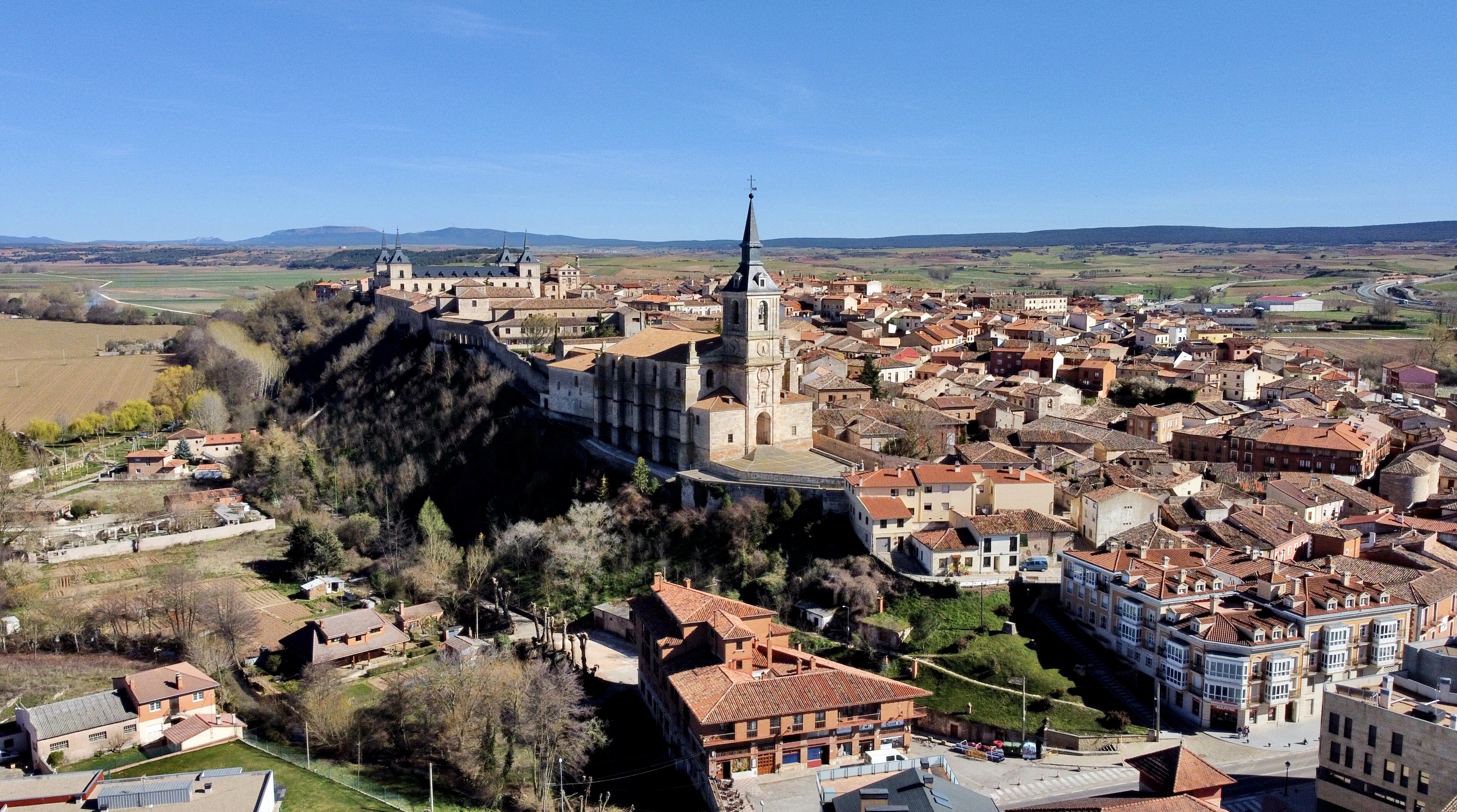
Burgos · Castilla y León
Lerma
- Province
- Burgos
- Declared
- 1965
- Status
- Conjunto Histórico
- Population
- 2848
- Elevation
- 849 m
Lerma is a heritage town in the province of Burgos, Castilla y León, Spain. It was designated a Conjunto Histórico (Spain's national heritage designation for historic ensembles) in 1965. Population 2848 (2013), elevation 849m.
Key facts
- Province
- Burgos
- Heritage status
- Conjunto Histórico (declared 1965)
- Population
- 2848 (2013)
- Elevation
- 849 m
History of Lerma
Lerma's development centers around Francisco de Sandoval y Rojas, the first Duke of Lerma and favorite of King Felipe III. The town served a similar role to royal Valladolid as El Escorial did to Madrid. Since medieval times, Lerma has been a required stop on the Royal Cattle Route connecting Extremadura with the Demanda mountains.
The town showcases notable Herrerian architecture and houses three cloistered convents with over a hundred nuns. Its main square covers 6,862 square meters, ranking among Spain's largest and exceeding Salamanca's Plaza Mayor in size. The historic center received artistic-historic designation in 1965.
Since 1960, Lerma has hosted an agricultural machinery fair considered northern Spain's most important agricultural exhibition. Today it forms the "Arlanza Triangle" with nearby Covarrubias and Santo Domingo de Silos. The town houses the regulatory council for Arlanza wine denomination and hosts Burgos province's only parador, located in the Ducal Palace and considered among Spain's ten best paradors.
Practical Travel Info
Lerma's cuisine centers on Burgos morcilla (blood sausage) and wines from the Arlanza denomination of origin. The specialty is roasted lamb and suckling lamb from churra sheep, enhanced by fine pastures along the Arlanza valley and traditional wood-fired ovens. Local restaurants also prepare lamb chops, heads, tripe, and trotters with care.
During hunting season, small game dishes featuring quail, partridge, hare, and rabbit become available. The region's meat-focused gastronomy reflects the broader Burgos provincial tradition of rich, hearty dishes prepared with local ingredients and traditional cooking methods.
Location
Ratings & reviews on Google Maps
Quick answers
When was it declared heritage?▾
Conjunto Histórico in 1965.