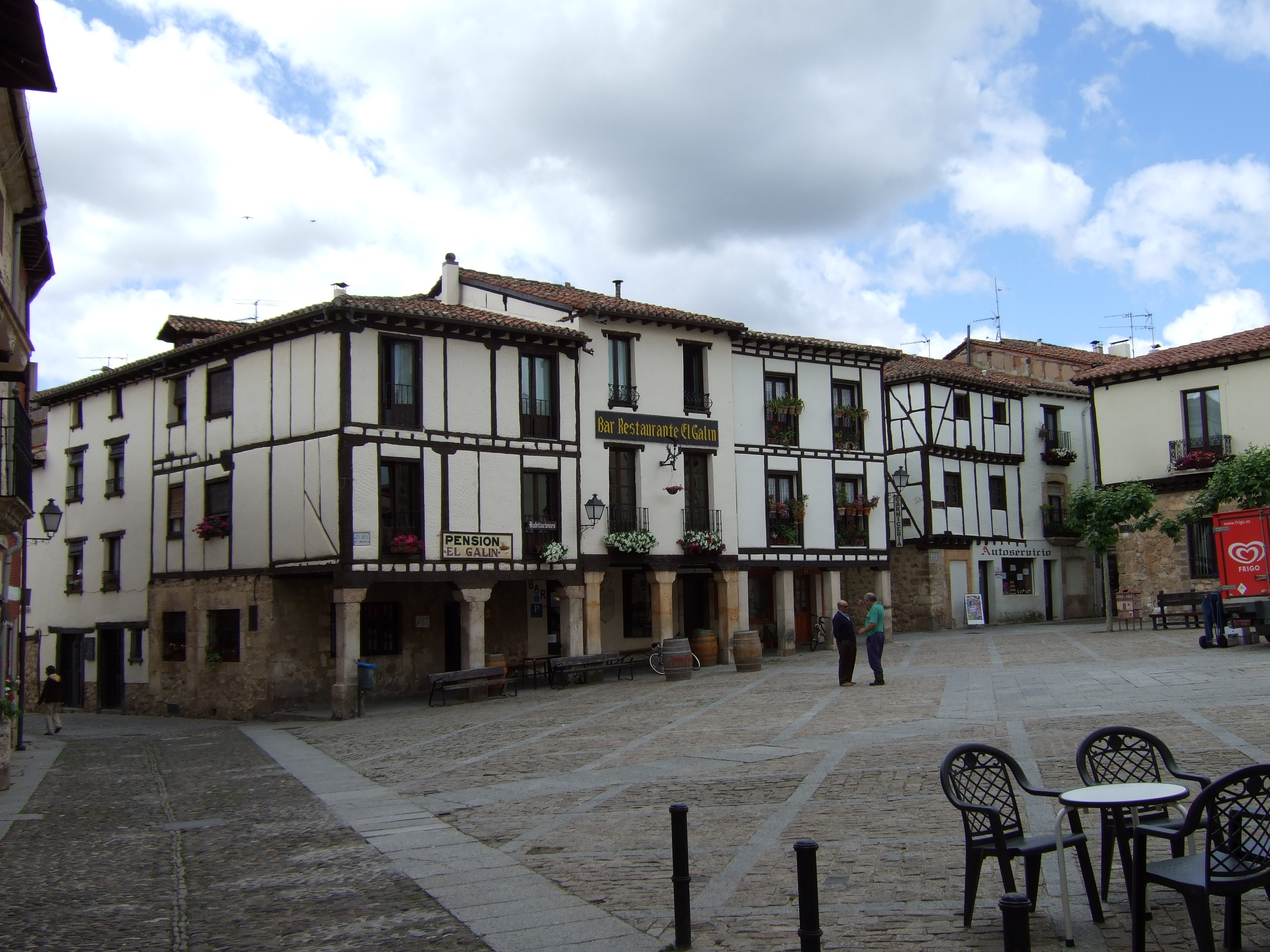
Burgos · Castilla y León
Covarrubias
- Province
- Burgos
- Declared
- 1965
- Status
- Conjunto Histórico
- Population
- 603
- Elevation
- 894 m
Covarrubias is a heritage town in the province of Burgos, Castilla y León, Spain. It was designated a Conjunto Histórico (Spain's national heritage designation for historic ensembles) in 1965. Population 603 (2013), elevation 894m.
Key facts
- Province
- Burgos
- Heritage status
- Conjunto Histórico (declared 1965)
- Population
- 603 (2013)
- Elevation
- 894 m
History of Covarrubias
Multiple ancient cultures have left traces in the fertile valley where Covarrubias sits, but the first known inhabitants were the Turmódigos, a pre-Roman Iberian tribe. The town's medieval origins trace to Visigothic king Chindasvinto, who founded it over Roman castle remains, though his walls were destroyed around 737. After Visigothic and Arab periods, Count Fernán González of Castilla made this his retreat at his mother Muniadona's palace.
His son García Fernández transformed the town's fortunes in 978, purchasing it from Valeránica monks and establishing the Infantado de Covarrubias - an independent territory with its own ecclesiastical, civil and criminal jurisdiction, plus tax exemptions. Initially ruled by García's daughter Urraca, the Infantado originally encompassed seventy towns and churches, twenty monasteries, and vast lands across modern-day Burgos, Santander, Álava, Logroño and Palencia provinces. A notable later ruler was Princess Kristina of Norway, who married Infante Felipe in 1258 after originally coming to marry Alfonso X.
She died of melancholy in Seville four years later, homesick for Norwegian fjords, and was buried in Covarrubias collegiate church. The abbey's privileges finally ended in 1759, with remaining civil rights abolished under Isabel II.
Heritage & Monuments
The entire town was declared a Cultural Heritage site in 1965. The standout monument is the Torre de la Emperedada, a 10th-century defensive tower considered Mozarab architecture, with pyramid-like form and rectangular base measuring 10 x 14 meters, narrowing to 7.5 x 11 meters at the top. Four-meter-thick walls at the base supported four floors, accessed by removable ladder through a horseshoe arch doorway.
Legend claims Infanta Urraca was walled up here by her father for romancing a shepherd. The collegiate church features three naves, four chapels, a 16th-century cloister, and Castilla's oldest functioning organ. Its museum houses Romanesque capitals and an extraordinary 15th-century Adoration of the Magi triptych attributed to a Gil de Siloé disciple.
Town walls were demolished in the 16th century on orders of Felipe II's physician to combat plague, though sections remain along the river and near Santo Tomás church. This 16th-century church preserves a functioning 17th-century organ and notable features including Renaissance nativity window, Romanesque baptismal font, and plateresque staircase. A modern chapel in Valle de los Lobos, designed like a Viking helmet, commemorates Princess Kristina with panels telling her story.
Location
Ratings & reviews on Google Maps
Quick answers
When was it declared heritage?▾
Conjunto Histórico in 1965.