Burgos · Castilla y León
Castrojeriz
- Province
- Burgos
- Declared
- 1944
- Status
- Conjunto Histórico
- Population
- 853
- Elevation
- 795 m
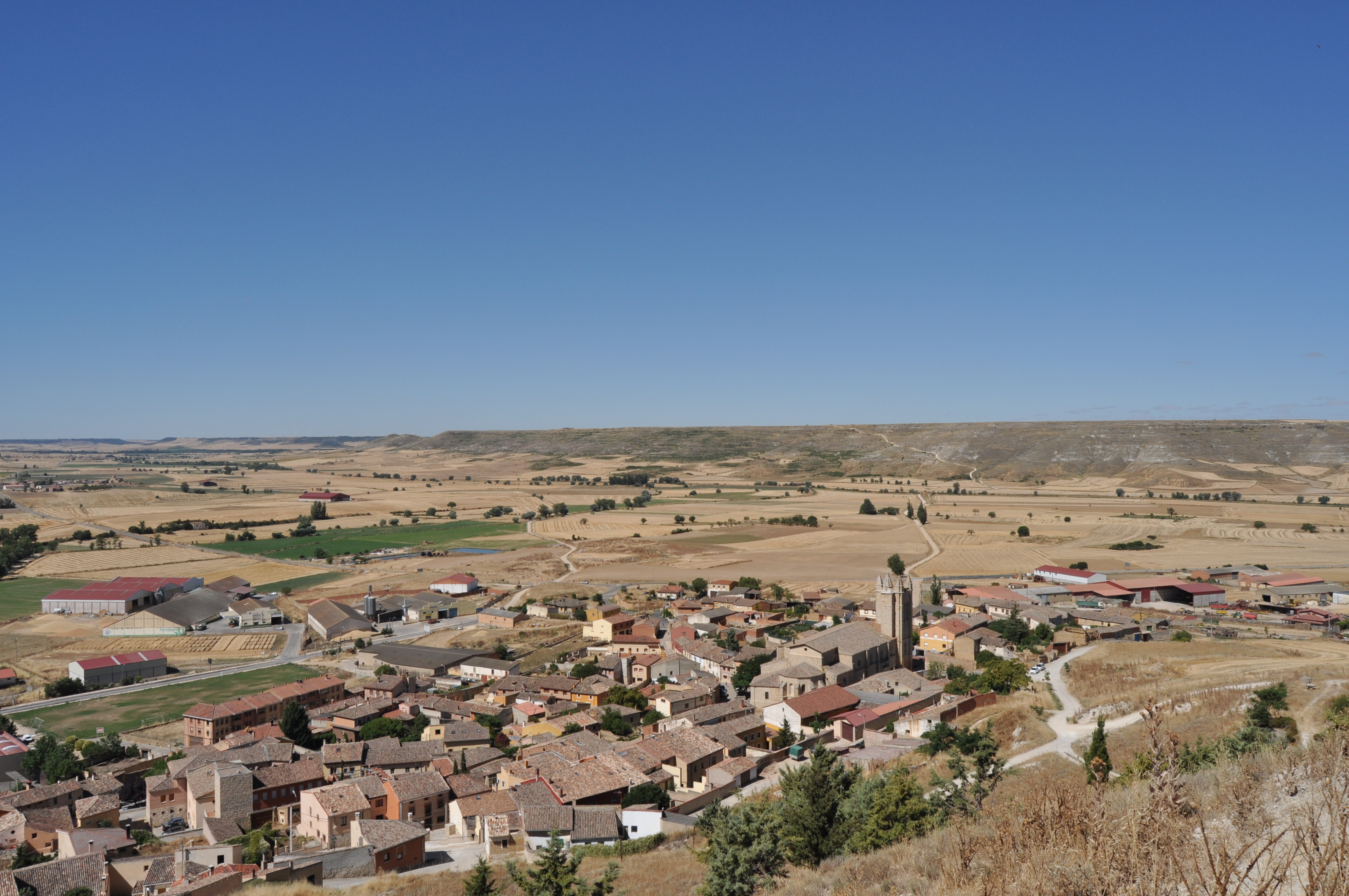
Castrojeriz is a heritage town in the province of Burgos, Castilla y León, Spain. It was designated a Conjunto Histórico (Spain's national heritage designation for historic ensembles) in 1944. Population 853 (2013), elevation 795m.
A long, thin town strung along a hillside under a ruined castle, and one of the quieter, more atmospheric stops on the Camino Francés.
Key facts
- Province
- Burgos
- Heritage status
- Conjunto Histórico (declared 1944)
- Population
- 853 (2013)
- Elevation
- 795 m
History of Castrojeriz
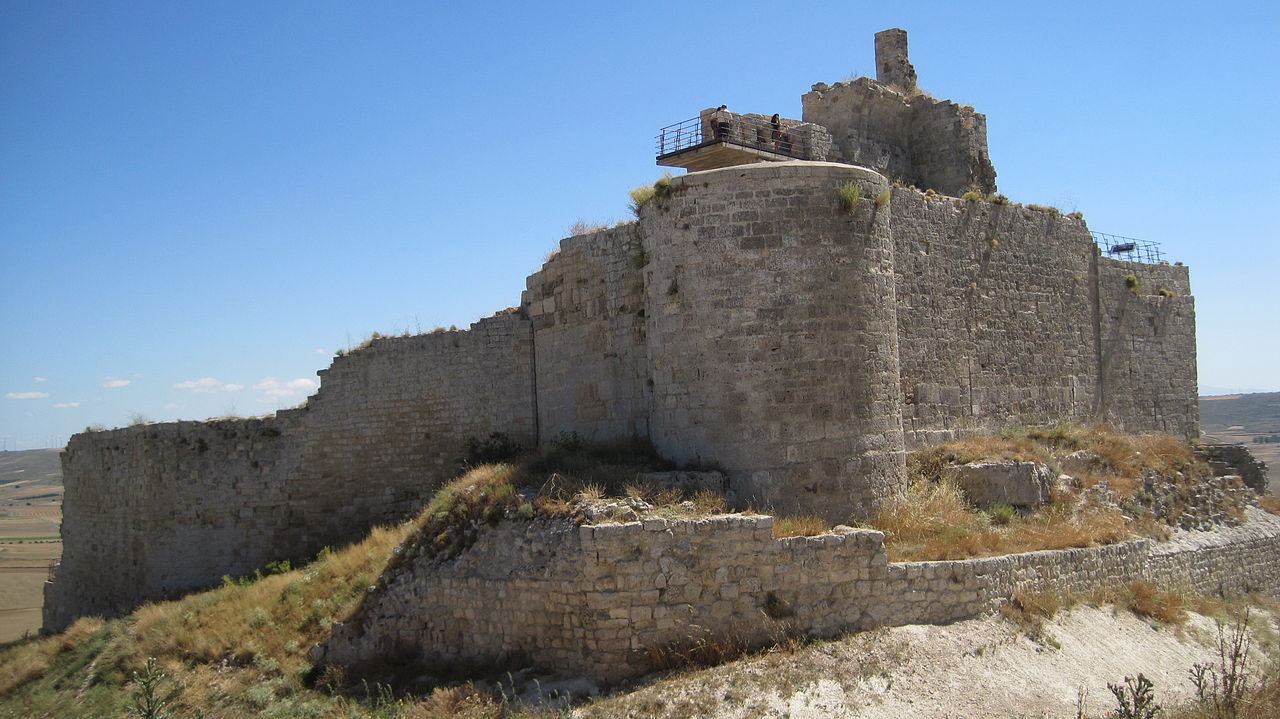
Castrojeriz likely traces back to the ancient Castrum Sigerici mentioned in 9th-century chronicles, with documented linguistic evolution to its current name. The hilltop castle ruins mark the town's original settlement, founded by Count Muño Núñez who defended it against Arab forces in the late period. The site had previously served as a Celtiberian, Roman, and Visigothic fortress.
In 974, Count García Fernández of Castile granted it a charter - considered the first fuero in all of Castile, notably allowing any peasant who owned a horse to be considered equal to minor nobility. The town below exemplifies Jacobean urbanism, with all houses aligned along the Camino de Santiago. This street-path is the longest of its kind on the entire pilgrimage route and contains notable religious and civil buildings.
As an important Camino stage, it maintained several hospitals. A distinctive stone cross displays a TAU symbol rather than the traditional Latin cross, possibly commemorating the Antonine Order who operated a monastery and hospital outside town, treating pilgrims afflicted with St. Anthony's Fire.
Heritage & Monuments
The entire town holds Cultural Heritage status as a Historic Ensemble and integral part of the Camino de Santiago. The medieval castle ruins, site of Queen Leonor of Castile's assassination in 1359 by order of her nephew Pedro I, underwent restoration for tourist visits completed in 2013. The Church of San Juan stands as the town's architectural centerpiece along the street-camino.
This fortress-like structure with its slender tower contains Romanesque elements at its base and features an immense three-nave interior with palm-like vaulted ceilings. Originally belonging to the Templars, it later passed to the Hospitaller Brothers of St. Anthony.
Notable features include a stunning five-pointed star rose window with mystical symbolism, a 14th-century mudéjar cloister with astrological references and Gómez Sandoval family shields, funeral chapels with Flemish retables, and an 18th-century rococo altarpiece from the former San Antón monastery. Outside town stand ruins of the Royal Hospital of San Antón, founded by Alfonso VII in 1146, where Antonine monks treated pilgrims suffering from St. Anthony's Fire.
Only the entrance arch remains of this once-important institution.
Watch
Practical Travel Info
Access is via Bilbao, Madrid, or Santander airports, with no train service available. The village is easily walkable, with several ATMs including an Ibercaja branch and multiple grocery stores. Various bars serving food and restaurants provide dining options.
The Proxima grocery store offers small round prepared pizzas for €3 (June 2025). Drinking water fountains are located throughout the village.
Gallery


Location
Ratings & reviews on Google Maps
Quick answers
Is Castrojeriz worth visiting?▾
A long, thin town strung along a hillside under a ruined castle, and one of the quieter, more atmospheric stops on the Camino Francés. The hilltop castle ruins and the collapsed-arch church of San Antón just outside town.
When was it declared heritage?▾
Conjunto Histórico in 1944.
Editor’s notes
I walked into Castrojeriz late on a hot afternoon and the thing that struck me was how *long* it is — the town follows the contour of the hill rather than clustering, so it takes a while to walk end to end.
Park at the lower end near the church and walk up; the streets get steep near the castle. Allow an hour if you just want a look, half a day if you climb to the castle and linger.
The ruined arch of the Convento de San Antón, just before you reach the town, is worth stopping for — pilgrims still pass right under it.